


Brass Hose Fittings vs Stainless Steel: Which One Should You Choose?
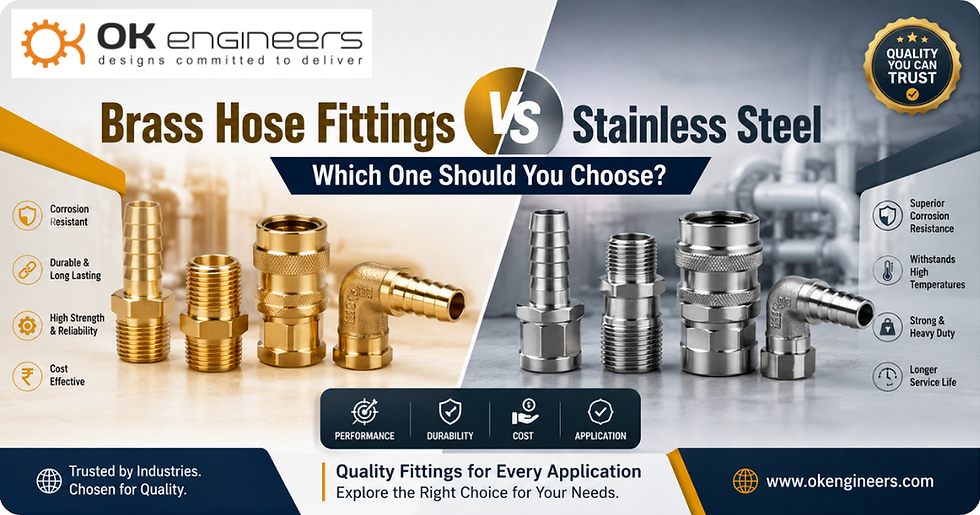
Choosing the right hose fitting material is one of the most important decisions for ensuring the efficiency, safety, and longevity of any fluid transfer system. Whether you're working with plumbing, industrial machinery, irrigation, pneumatic equipment, or hydraulic systems, the material of your hose fittings directly affects performance and maintenance costs.
Two of the most commonly used materials are brass and stainless steel. While both offer excellent durability, they serve different purposes depending on the application. Understanding their differences can help you make an informed decision.
What Are Brass Hose Fittings?
Brass Hose Fittings are precision-engineered connectors used to join hoses with pipes, valves, pumps, compressors, and other equipment. They provide secure, leak-proof connections for transferring water, air, gas, fuel, oil, and other fluids.
Made from high-quality brass alloys, these fittings are valued for their excellent machinability, corrosion resistance, and long service life. They are widely used in residential, commercial, and industrial applications where reliability and performance are essential.
What Are Stainless Steel Hose Fittings?
Stainless steel hose fittings are manufactured from corrosion-resistant steel alloys containing chromium and, in many cases, nickel or molybdenum. These fittings are designed for demanding environments where high strength, extreme temperatures, or exposure to aggressive chemicals require superior material performance.
They are commonly found in industries such as food processing, pharmaceuticals, marine engineering, chemical manufacturing, and heavy industrial operations.
Brass Hose Fittings vs Stainless Steel: Key Comparison
1. Corrosion Resistance
Both brass and stainless steel offer excellent corrosion resistance, but they perform differently depending on the environment.
Brass Hose Fittings are highly resistant to rust and corrosion when used with water, air, oils, and many non-aggressive fluids. They perform exceptionally well in plumbing, irrigation, and general industrial applications.
Stainless steel provides even greater resistance in highly corrosive environments, including exposure to saltwater, harsh chemicals, and extreme weather conditions.
Best Choice:
General industrial use: Brass Hose Fittings
Marine or chemical environments: Stainless steel
2. Strength and Durability
Brass is strong enough for most commercial and industrial applications while offering excellent resistance to wear and repeated use.
Stainless steel has higher tensile strength and performs better in applications involving extremely high pressures or heavy mechanical loads.
For most standard industrial systems, Brass Hose Fittings provide more than enough durability while being easier to machine and install.
3. Pressure Handling
Both materials can withstand significant operating pressures.
High-quality Brass Hose Fittings are suitable for plumbing systems, compressed air lines, hydraulic equipment, and industrial machinery.
Stainless steel is generally preferred for extremely high-pressure systems found in specialized industrial applications.
4. Temperature Performance
Brass performs efficiently across a wide range of operating temperatures, making it suitable for hot water systems, heating equipment, and industrial fluid transfer.
Stainless steel maintains its strength at much higher temperatures, making it the preferred choice for high-temperature industrial processes.
5. Machinability
One of the biggest advantages of Brass Hose Fittings is their excellent machinability.
Brass allows manufacturers to produce:
Highly accurate threads
Smooth surface finishes
Precision dimensions
Custom designs
This results in tighter seals and easier installation.
Stainless steel is significantly harder to machine, which increases manufacturing complexity and cost.
6. Installation
Because brass is easier to machine, Brass Hose Fittings typically feature cleaner threads and smoother finishes.
This allows:
Faster installation
Better sealing
Reduced maintenance
Lower risk of thread damage
Stainless steel fittings may require more installation effort due to their hardness.
7. Cost Comparison
Cost is an important consideration for every project.
Brass Hose Fittings are generally more economical than stainless steel fittings while still offering outstanding durability and corrosion resistance.
For applications where extreme corrosion or exceptionally high temperatures are not a concern, brass delivers excellent value for money.
Stainless steel usually involves higher material and manufacturing costs, making it better suited for specialized environments where its additional properties are required.
8. Maintenance Requirements
Both materials require minimal maintenance when used correctly.
However, Brass Hose Fittings are known for their long service life and easy maintenance in standard industrial applications.
Routine inspections and proper installation help ensure years of reliable performance.
Comparison Table
Feature | Brass Hose Fittings | Stainless Steel Hose Fittings |
Corrosion Resistance | Excellent | Excellent (Superior in harsh environments) |
Strength | High | Very High |
Pressure Resistance | High | Very High |
Temperature Resistance | Excellent | Excellent for extreme temperatures |
Machinability | Excellent | Moderate |
Installation | Easy | Moderate |
Cost | Cost-effective | Higher |
Maintenance | Low | Low |
Best Applications | Plumbing, irrigation, air, water, industrial systems | Marine, food processing, chemical plants, pharmaceuticals |
When Should You Choose Brass Hose Fittings?
Brass Hose Fittings are the ideal choice when your project requires:
Reliable leak-proof performance
Excellent corrosion resistance
Long service life
Cost-effective solutions
Easy installation
Precision threading
Industrial durability
Plumbing and irrigation systems
Pneumatic equipment
Hydraulic applications
Automotive systems
For most industrial, commercial, and residential projects, brass offers the ideal balance between performance and affordability.
When Should You Choose Stainless Steel?
Stainless steel fittings are recommended when:
Equipment operates in highly corrosive environments.
The system is exposed to saltwater.
Strong acids or aggressive chemicals are present.
Extremely high temperatures are involved.
Maximum mechanical strength is essential.
Although stainless steel is excellent for these demanding conditions, many standard industrial applications can achieve outstanding performance with high-quality Brass Hose Fittings.
Why Choose OK Engineers?
When investing in hose fittings, choosing the right manufacturer is just as important as selecting the right material.
OK Engineers is a trusted manufacturer and exporter of precision-engineered brass components, serving customers across India and global markets. Our products are manufactured using premium-grade brass and advanced CNC machining technology to ensure consistent quality and performance.
Our Advantages
High-grade brass raw materials
Precision CNC machining
Strict quality control
Leak-proof manufacturing standards
Customized product development
BSP, BSPT, NPT, Metric and custom threads
Bulk manufacturing capability
Competitive pricing
Timely global delivery
Experienced export team
Whether you need standard or custom Brass Hose Fittings, our engineering expertise ensures products that meet your exact specifications.
Explore our complete range of Brass Hose Fittings here:
Tips for Selecting the Right Hose Fittings
Before purchasing hose fittings, consider:
Application type
Operating pressure
Working temperature
Thread standard
Hose diameter
Fluid compatibility
Environmental conditions
Industry compliance requirements
Consulting an experienced manufacturer like OK Engineers helps ensure you select the right fittings for long-term performance and reliability.
Conclusion
Choosing between Brass Hose Fittings and stainless steel hose fittings depends on your specific application, operating environment, and budget. While stainless steel offers superior performance in highly corrosive or extreme-temperature conditions, Brass Hose Fittings remain the preferred choice for most plumbing, industrial, pneumatic, hydraulic, irrigation, and automotive applications due to their excellent corrosion resistance, durability, precision, and cost-effectiveness.
At OK Engineers, we manufacture premium-quality Brass Hose Fittings designed to deliver reliable, leak-proof performance across a wide range of industries. With advanced manufacturing capabilities, strict quality control, and customized solutions, we are committed to providing brass fittings that meet international standards and exceed customer expectations.
If you're looking for dependable and precision-engineered brass hose fittings, trust OK Engineers for quality, performance, and long-term value.
Frequently Asked Questions (FAQs)
1. Are Brass Hose Fittings better than stainless steel fittings?
For most plumbing, industrial, irrigation, and pneumatic applications, Brass Hose Fittings offer an excellent combination of durability, corrosion resistance, easy installation, and cost-effectiveness. Stainless steel is preferred for highly corrosive or extreme-temperature environments.
2. Can Brass Hose Fittings handle high-pressure applications?
Yes. High-quality Brass Hose Fittings are designed to withstand high operating pressures in hydraulic, pneumatic, and industrial systems when selected correctly for the application.
3. Why are Brass Hose Fittings more cost-effective?
Brass is easier to machine than stainless steel, resulting in lower manufacturing costs while still providing excellent strength, corrosion resistance, and long service life.
4. Can OK Engineers provide customized Brass Hose Fittings?
Yes. OK Engineers manufactures customized Brass Hose Fittings in various sizes, thread standards, finishes, and specifications to meet customer requirements.
5. Where can I explore the range of Brass Hose Fittings from OK Engineers?
You can explore the complete range of Brass Hose Fittings at and learn more about the company at Ok Engineers.


Comments